
Reliable Data Connections, Built to Last

Data Integration Services

Moving enterprise data securely and reliably across systems to support reporting, analytics, and operations.

Connecting Data Without Creating Risk

Life sciences organizations depend on data flowing across clinical, commercial, regulatory, and operational systems. When integrations are built quickly or inconsistently, they become fragile, difficult to maintain, and risky in regulated environments.

Data Integration Services address this challenge by providing structured, scalable integration patterns that support data movement while maintaining traceability, reliability, and compliance. These services reduce complexity and help organizations avoid point-to-point integrations that break over time.
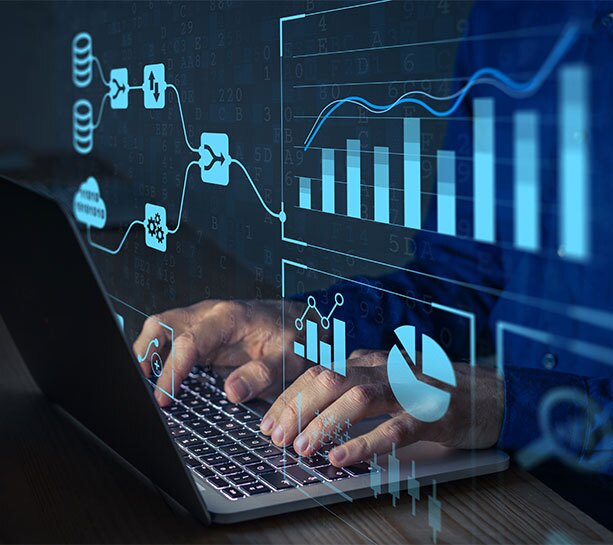
Man typing on laptop with graphs as the overlay

Built for Integration in Regulated Environments

Integration capabilities designed to connect complex life sciences systems while maintaining governance, reliability, and control.
Designed for life sciences systems
Supports integration across EDCs, CRO platforms, CRM, ERP, data warehouses, and analytics environments.
Governance-aware by design
Maintains traceability, auditability, and control as data moves between systems.
Scalable and repeatable
Uses standardized integration patterns that can be reused as systems and data volumes grow.

The Impact of Reliable Data Integration

Reliable data integration creates a stable foundation for enterprise operations, analytics, and decision-making in regulated environments.
Consistent Data Flow Across Systems
Ensures enterprise data moves predictably and accurately between platforms and teams.
Reduced Operational Complexity
Replaces brittle point-to-point integrations with structured, maintainable integration models.
Improved Data Availability
Delivers timely access to data for reporting, analytics, and downstream processes.
Lower Long-Term Maintenance Risk
Creates integration architectures that are easier to support, update, and scale over time.

Consistent Data Movement Across Systems

Well-designed integration processes ensure data flows predictably and remains trustworthy as it moves across platforms.
1
Standardized Integration Patterns
Defines repeatable approaches for ingesting, transforming, and delivering data across systems.
2
Validated Data Pipelines
Ensures data transfers are reliable, traceable, and aligned to regulatory expectations.
3
Error Handling and Monitoring
Identifies failures early and supports remediation before downstream impact occurs.
4
Integration Architecture Design
Aligns integration approaches to enterprise data strategies and platform ecosystems.

Keep Your Data Moving Without Disruption

Stop data silos from slowing your teams down. We design and implement integrations that ensure consistent, governed data movement across applications and clouds.